5 essential strength training exercises for runners to do at home
Strong, balanced legs are the foundation of injury-free running. Often, one side of the body compensates for the other, leading to muscle imbalances that can cause long-term issues. These home workouts for runners focus on unilateral (single-leg) movements to even out strength and improve core stability.
Whether you are training for the London Marathon or a local 5k, these five no-equipment exercises will help you build the power you need.
How to get started
If you’re new to strength training, start with double-leg exercises like standard squats and calf raises. As your strength grows, progress to these single-leg variations.
Pro-tip: If balance is tricky, lightly hold onto a piece of furniture for support while you perform these movements.
1. Single leg deadlift
Target: Hamstrings, glutes and balance.
- Technique: Balance on one leg with a slight bend in the knee. Reach toward the floor while extending your other leg behind you, keeping your spine neutral.
- The goal: Aim for your upper body to be parallel to the floor before returning to the start. For an extra challenge, keep your extending leg off the ground between repetitions.
2. Single leg squats
- Target: Quads, glutes and hip stability.
- Technique: Balance on one leg with your arms and opposite leg extended in front of you. Squat down, keeping your weight in your heel and your spine neutral.
- The goal: Squat as low as possible without lifting your heel off the floor.
3. Single leg calf raises
- Target: Lower leg strength and ankle stability.
- Technique: Balance on one leg with a soft knee (do not lock it). Raise your heel to come up onto your toes, then slowly lower back down.
- The goal: Control the tempo to maximize muscle engagement.
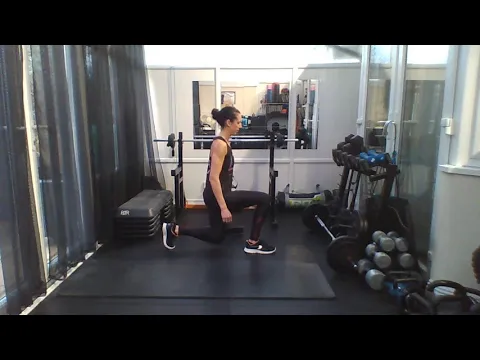
4. Forward lunges
- Target: Overall leg power and co-ordination.
- Technique: Take a large step forward, lowering your back knee toward the floor. Ensure your front knee stays aligned directly above your ankle at a 90-degree angle.
- The goal: Push back up to the starting position in one fluid motion without lifting your back foot.
5. Plank variations for core stability
A strong core is vital for maintaining running form when you’re tired.
- Forearm plank: Lift your body so only your toes and forearms touch the ground. Maintain a straight line from ankles to head. Hold for 10-40 seconds.
- Side plank: Lie on your side and lift your hips, balancing on one forearm and the side of your foot. Reach your top arm toward the ceiling. Hold for 10-40 seconds.