
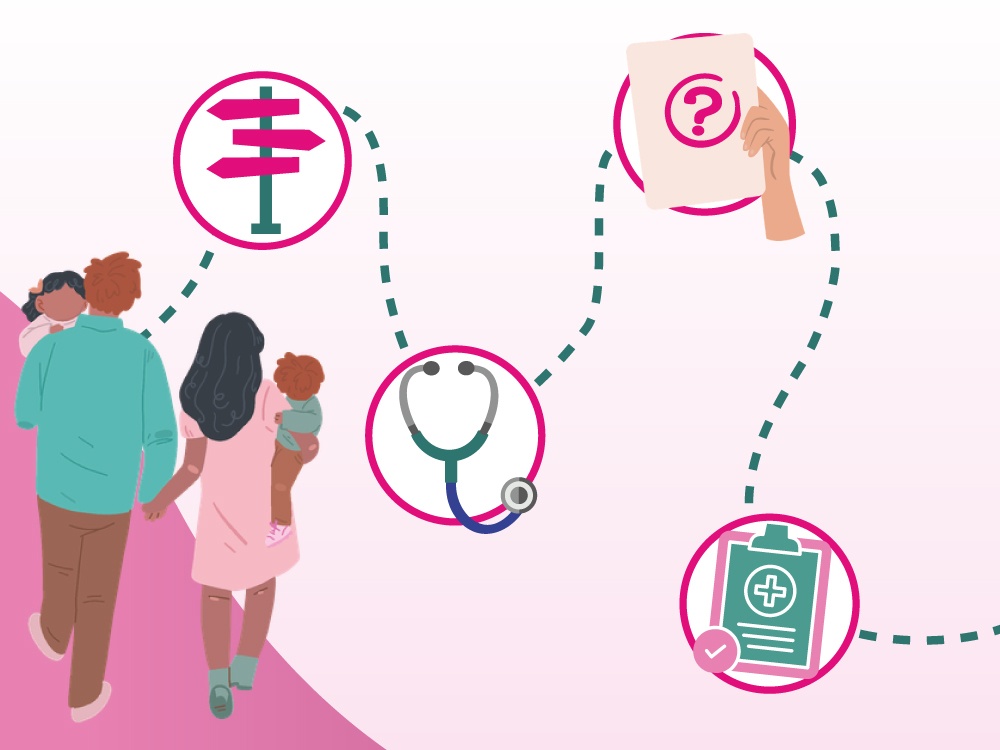
At The Lily Foundation, we’ve always known that the moment of receiving a mitochondrial disease diagnosis shapes everything that comes next. Families tell us time and again that it’s one of the hardest conversations they’ll ever have, and yet it’s a part of mitochondrial disease care that’s been largely overlooked in research.
Today, we’re proud to share the results of our first piece of Lily Foundation–led research, a national study exploring what it’s really like to receive a mitochondrial disease diagnosis from the patient and family perspective. Alongside the full study, we’ve created a plain language summary to make the findings accessible to patients, families and non-specialists.
This work marks an important milestone in mitochondrial disease research – patient-driven research that’s shaping real change.
Why this research matters
While scientific advances, including our own Precision Medicine Diagnostics Project, are helping to deliver faster and more accurate diagnoses, far less attention has been paid to the human experience. Who gives you your diagnosis? How and where is it delivered? What support are you given afterwards?
Existing studies focus mostly on caregivers. Very few have asked patients themselves what this moment feels like.
Through our patient engagement work, it became clear that the quality of the diagnostic experience matters just as much as the science behind it. Families told us their experiences varied enormously – from sensitive, well-supported conversations to being told life-changing news over the phone, by a non-specialist or even in a letter or via an app.
Our study set out to understand that disparity – and change it.
How the study worked
To explore the patient experience in depth, we partnered with Dr Will Macken and colleagues at University College London, commissioning Rare Disease Research Partners to run an independent study shaped by priorities raised by patients themselves.
Our study, conducted in April and May 2025, explored people’s experiences before, during and after diagnosis of mitochondrial disease. We shared the details across Lily channels, specialist centres and patient groups.
172 people responded, with 103 meeting the eligibility criteria. That’s 103 people willing to share their direct lived experience of being told they or their loved one had mitochondrial disease.
What our research found
A long and uncertain journey
Participants reported seeing multiple specialists – in some cases up to 11 different doctors – before receiving an accurate diagnosis. More than one third had been misdiagnosed with other conditions, such as diabetes, mental health problems or cerebral palsy.
As we know, mitochondrial diseases can cause a wide range of symptoms and affect many parts of the body, which helps explain why diagnosis is so challenging. However, many participants said they felt their concerns were dismissed or not fully investigated, particularly early in their diagnostic journey.
How a diagnosis is delivered matters
While many people described positive experiences once diagnosed, gaps in support were common. Less than 60% of participants were referred to a specialist mitochondrial clinic, and some waited up to two years for their first appointment.
Around 30% of participants received their diagnosis remotely – either by phone, letter or via the NHS app. Some said this left them feeling unprepared, particularly when little explanation or follow‑up support was offered.
The research also found a decline in confidence in doctors’ expertise in mitochondrial disease in recent years, possibly linked to wider access to genetic testing outside of specialist services.
Beyond the diagnosis itself
Although receiving a diagnosis often brought relief through understanding, many participants reported a lack of emotional and psychological support, as well as limited information about patient organisations that could help them cope.
The findings highlight that diagnosis isn’t just a medical event, but an emotional experience that can shape someone’s wellbeing long after the result has been delivered.
What happens next
At The Lily Foundation, we’ve already acted on what families have told us. Our new Guide to Mitochondrial Disease, created in partnership with experts in the field, has been distributed to NHS clinics around the UK, so that no one leaves their first appointment empty-handed, while a digital version is available to anyone visiting our website.
The next phase of our research will involve in‑depth interviews with people who took part in the survey, with the aim of identifying practical ways to improve the diagnostic process and support people more effectively before, during and after diagnosis.
Why this work matters
Patient organisations are often the first point of contact after diagnosis. This research proves how vital that role is. By funding research, partnering with clinicians, empowering patient groups like IMPACT and giving our community a voice, we’re not just identifying problems – we’re shaping the solutions.
Mitochondrial disease is complex, and diagnosis will never be easy. But the experience can – and must – be improved. Every one of the 103 individuals who shared their story did so in the hope that patients and families in the future will face a kinder, clearer pathway.
This research is the first step toward making that a reality.
We’re extremely grateful to everyone who shared their experiences during this study. Your voices are helping to drive change for others facing a mitochondrial disease diagnosis.
Read the full Plain Language Summary.
Learn more about receiving a mitochondrial disease diagnosis.