

Zoom Room webinars
Watch our sessions filled with practical advice for living well with mitochondrial disease.

Fighting mito,
finding hope.
Watch our sessions filled with practical advice for living well with mitochondrial disease.
Our Zoom Room webinars are hosted by the Lily team alongside professionals from across healthcare, research and education, and are designed to support patients and loved ones by covering the topics that matter most to our community.
Each session is carefully chosen and prepared based on the needs of patients, families and carers, so you can be sure you’re hearing about what’s relevant – and helpful – right now.
Whether you’re looking for practical advice or simple guidance on everyday living with mitochondrial disease, our webinars are here to help.
Below, you’ll find recordings of all our previous Zoom Room sessions. Whether you missed a session or want to revisit a topic, these recordings are available to watch in your own time.
Make sure you’ve signed up to receive our emails so you don’t miss out on future webinars.
Living with any form of mitochondrial disease can affect not only your body, but also your relationships, sense of self and the way you experience the world. When others can’t fully see or understand your condition, it can leave you feeling unseen, misunderstood and sometimes isolated.
This online group workshop, with others who have similar lived experiences, gives you the opportunity to explore what living with mitochondrial disease means to you and how it may impact your relationships. The session, hosted by The Lily Foundation charity and led by Rareminds counsellor Rebecca Hargreaves, considers the emotional challenges and difficulties of talking about your condition, explores ways of communicating your experience and looks at possible strategies and techniques that can support you.
Rebecca is an Adult and Young People’s Counsellor with a particular interest in the psychological impact of health conditions on the family as a whole. She originally worked as a nurse for over 20 years including in hospices, and is the former Lead for a large schools counselling service. She works as a counsellor with several rare disease patient organisations.
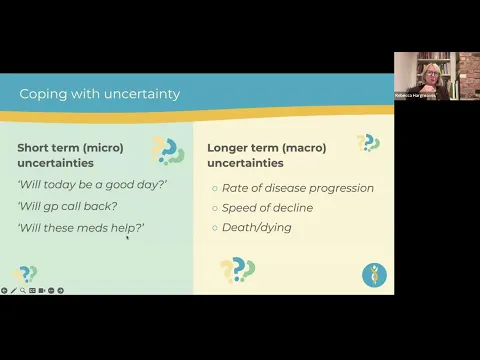
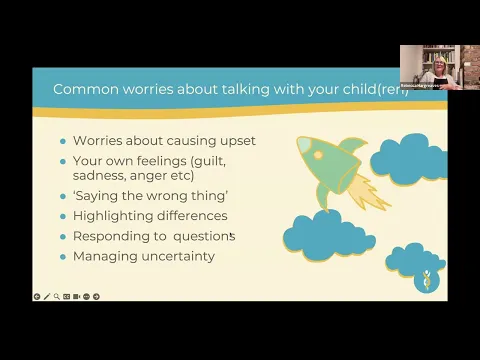
Finding the words to talk with your child about their diagnosis can feel daunting. This reflective workshop, hosted by The Lily Foundation charity and led by Rebecca Hargreaves from Rareminds, offers a space to explore the thoughts, feelings and uncertainties that these conversations can evoke for both parents and children.
The session considers how honest, developmentally appropriate communication can help children make sense of their experiences, strengthen emotional connection and foster resilience, while supporting parents to feel more confident in navigating these important conversations.
Rebecca is an Adult and Young People’s Counsellor with a particular interest in the psychological impact of health conditions on the family as a whole. She originally worked as a nurse for over 20 years including in hospices, and is the former Lead for a large schools counselling service. She works as a counsellor with several rare disease patient organisations.
This is the sixth in The Lily Foundation’s series of webinars on mitochondrial disease. Watch this informal but informative session on diagnosing mitochondrial disease led jointly by guest speakers from the Newcastle and London mitochondrial teams. The webinar will guide patients and families through the journey to diagnosis and what to expect along the way.
It covers NHS testing pathways as well as the latest advances in research, including projects such as the Precision Medicine Diagnostics study, helping to demystify how a diagnosis is reached.
Whether you’re living with mitochondrial disease or supporting someone who is, this session offers valuable insight into the diagnostic process and the work being done to improve it.

Professor Shamima Rahman joins Katie Waller, Head of Patient Programmes at The Lily Foundation, to provide the latest updates about mitochondrial research and what it really takes to turn scientific discoveries into real-world treatments.
Prof Rahman explains the challenges of developing drugs for rare mitochondrial diseases, how traditional clinical trial pathways work and how newer approaches are beginning to change the landscape. She also explores growing excitement around advanced therapies such as gene and stem cell treatments, while Katie talks about the importance of the patient voice in shaping research priorities.

Focusing on the vital role of diet, nutrition and swallow management in mitochondrial disease, this session is led by Dietitian Chantelle Noble-Deaney from the Oxford Specialist Mitochondrial Team. Chantelle explores how nutrition and swallowing difficulties can affect overall wellbeing in mitochondrial disease, and how tailored support can make a real difference.
Topics include:

Led by Oxford’s Dr Victoria Nesbitt and Clinical Nurse Specialist Sue West, this practical webinar breaks down what good care looks like today, and what you can do to stay as well as possible. It covers the latest UK care guidelines, use of vitamins and supplements, medications considered safe for people with mitochondrial disease and the key health checks and monitoring that matter most to those with mitochondrial disease.
Whether you’re living with mitochondrial disease or caring for someone who is, this session is packed with useful insights and guidance.

Hosted by Francesca Henderson, Paediatric Neuromuscular and Mitochondrial Physiotherapist at Oxford Children’s Hospital, this session focuses on exercise, pacing and equipment, and shares some top tips, suggestions and ideas for consideration to help with symptom management.
Suitable for parents and caregivers of a young patient with mitochondrial disease. Depending on the individual circumstances, families with older children may also benefit from this session.

A session aimed at adults with mitochondrial disease, hosted by Sarah Holmes, Clinical Specialist Physiotherapist in Neuromuscular Diseases at UCLH Centre for Neuromuscular Disease, focuses on exercise, pacing and equipment, and shares some top tips, suggestions and ideas for consideration to help mitochondrial disease patients manage their symptoms.
Suitable for adults aged 16 and over with mitochondrial disease. The session may also be helpful for parents and caregivers of mito patients.

Living with mitochondrial disease – or caring for someone who does – can be overwhelming. In our first Lily Zoom Room, Dr Ben Marram, Consultant Clinical Neuropsychologist, shares insights, practical strategies and support to help patients, families and loved ones live well, cope better and navigate life’s challenges.
Suitable for people affected by mitochondrial disease, their families, friends or colleagues, and for those who may have lost someone to the condition.

Our guide will help you make sense of your condition. Find easy-to-understand explainers, science simplified and the reassurance that we’re with you every step of the way.
If you have any problems please email [email protected]