


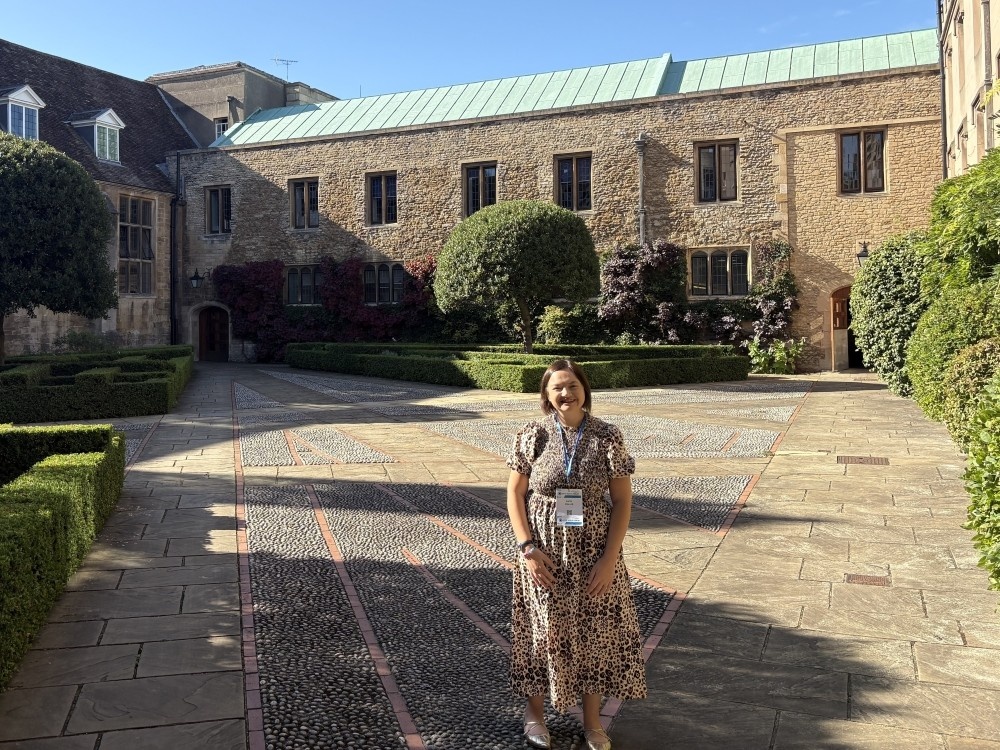
Cambridge. A city where history, discovery and science collide. A place steeped in some of the most important scientific discoveries in history, which remains at the forefront of radical thinking and scientific progress today.
It’s a city associated with some of the biggest names and discoveries in science, from Isaac Newton and Charles Darwin to the work of Rosalind Franklin, Francis Crick and James Watson who helped uncover the structure of DNA.
That made Cambridge a fitting setting for the inaugural Optic Nerve Forum, a new two-day event co-ordinated by Professor Patrick Yu-Wai-Man. The event brought together researchers, clinicians, industry and patient representatives from around the world with the goal of sharing knowledge, challenging ideas and moving the field forward.
Unlike a traditional conference, this forum was deliberately designed to create space for discussion, shared learning and challenge alongside scientific presentations, giving people with different expertise and perspectives the opportunity to learn from each other.
Why was The Lily Foundation at an Optic Nerve Forum?
The focus of this year’s meeting was on optic neuropathies, a group of conditions caused by damage to the optic nerve, which carries visual information from the eye to the brain. These include mitochondrial diseases that primarily affect the optic nerve, such as Leber’s Hereditary Optic Neuropathy (LHON) and Autosomal Dominant Optic Atrophy (ADOA), both conditions supported by The Lily Foundation.
While many mitochondrial diseases can affect vision, in LHON and ADOA the optic nerve is at the heart of the disease. This makes research into how the optic nerve becomes damaged, and how that damage might be prevented or treated, particularly relevant to the mito community.
The Lily Foundation were joined by colleagues from the LHON Society, LHON Collective and Cure ADOA Foundation. The meeting provided an important opportunity for patient organisations representing different communities to share priorities, strengthen collaboration and ensure patient perspectives were represented within discussions about future research and treatment.
Learning from LHON
Over the course of the two-day meeting, there was a dedicated focus on LHON as a model disease, using what’s been learned from research and treatment development in LHON to explore questions that could also be relevant to other optic nerve conditions.
Sessions examined the clinical trial and real-world evidence that’s supported the approval of idebenone, the first approved treatment for LHON, alongside ongoing work to develop gene therapy approaches. Discussions also highlighted the need for standardised clinical guidelines, so that people affected by LHON can receive consistently high standards of diagnosis, treatment and care wherever they live.
As the meeting progressed, discussions moved into the mechanisms behind optic nerve injury, including why the nerve becomes damaged and what might make it particularly vulnerable. Researchers also explored neuroprotection and regeneration: how the optic nerve might be protected from further damage and, ultimately, whether damaged nerve cells could be encouraged to repair or regenerate.
Another important area was how researchers can better detect and measure disease using advanced imaging and biomarkers, measurable changes in the body that can help show how a disease is progressing or whether a treatment is having an effect.
Attention then turned to future treatments and technologies, including targeted drug delivery using robotic surgical approaches and the potential for gene editing in mitochondrial optic neuropathies.
The event also explored the continuing role of animal models in testing new therapeutic approaches, as well as the role of dysfunctional mitochondria in more common conditions such as glaucoma. These discussions demonstrated how studying rare mitochondrial conditions can contribute to a much wider understanding of optic nerve disease, while advances elsewhere in the field may in turn create new opportunities for people affected by mitochondrial disease.
From scientific progress to better outcomes for patients
One of the most impactful sessions was a roundtable discussion on the next decade of optic nerve therapies. It brought scientists, clinicians, industry and patient representatives together to consider an important question:
“We have made extraordinary progress in understanding optic nerve disease and developing therapies… but are we translating that progress quickly enough into better outcomes for patients?”
The discussion acknowledged the significant progress made in therapy development over the last five years, as well as the opportunities being created by rapid advances in technology. However, there was also recognition of the need to progress promising treatments through clinical trials more quickly, so that advances in the laboratory can translate into meaningful benefits for patients.
Collaboration between researchers, clinicians, industry and patients was highlighted as crucial to achieving this. Discussions also identified the need for better biomarkers and outcome measures, which help researchers determine whether a treatment is actually making a meaningful difference, alongside earlier and increased dialogue with regulators and those responsible for deciding whether new treatments can be funded and made available to patients, such as the MHRA and NICE.
Overall, the inaugural Optic Nerve Forum demonstrated the value of bringing different disciplines, sectors and patient communities together to share knowledge and challenge thinking. The discussions highlighted both the significant progress already being made in understanding and treating optic neuropathies, and the work still needed to translate scientific advances into meaningful benefits for patients.
For The Lily Foundation, being part of these conversations is an important opportunity to represent the mitochondrial disease community, build relationships with those working across the field and ensure that patient perspectives remain part of discussions about where research goes next.