

Celebrating LifeArc Early Career Researchers – Dr Andy Frey and the power of proteomics
Meet Early Career Researcher Dr Andy Frey, who’s involved in the LifeArc Centre for Rare Mitochondrial Diseases, helping to transform the future for affected patients.
As part of British Science Week, we’re celebrating the Early Career Researchers helping to transform the future for people living with mitochondrial disease.
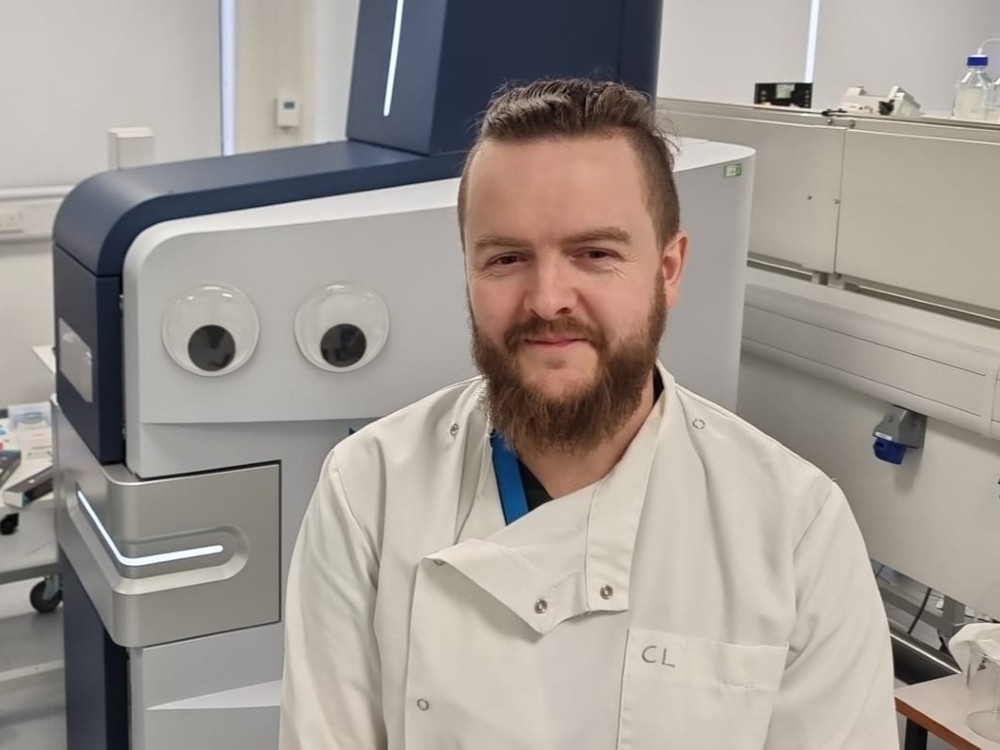
One of these researchers is Dr Andy Frey, a scientist at Newcastle University who uses cutting-edge proteomics to better understand mitochondrial disease and help improve diagnosis for patients.
Looking beyond genes: the role of proteomics
Much of modern medical research focuses on DNA – the genetic instructions inside our cells.
But DNA only tells part of the story.
Proteomics is the study of proteins, the molecules that actually carry out most of the work inside our cells. By analysing thousands of proteins at once, scientists can see what’s happening in cells in real time.
Dr Frey’s work uses proteomics to examine how mitochondrial diseases affect the proteins inside cells. This approach can reveal changes that might not be obvious from studying genes alone.
Speeding up diagnosis for patients
For people with mitochondrial disease, faster diagnosis can make a huge difference. It can help patients and families understand the cause of their symptoms, guide clinical care and connect them with appropriate support and research opportunities.
By identifying distinctive protein patterns associated with mitochondrial dysfunction, proteomics has the potential to make diagnosing these rare diseases quicker and more accurate.
In some cases, this approach may even help confirm whether newly discovered genetic variants are truly causing disease – something that’s often difficult using genetic data alone.
Hear from Dr Frey talking about his work:

Supporting the next generation of mitochondrial researchers
Early Career Researchers like Dr Frey play a vital role in advancing mitochondrial science. Through the LifeArc Centre for Rare Mitochondrial Diseases, researchers are developing innovative tools and technologies that bring us closer to better diagnostics and treatments.
Dr Frey’s work represents an important step towards a future where patients with rare mitochondrial diseases can receive answers more quickly and ultimately benefit from more targeted therapies.
During British Science Week, we celebrate the dedication and creativity of researchers like Dr Frey who are helping turn scientific discovery into real progress for patients.