


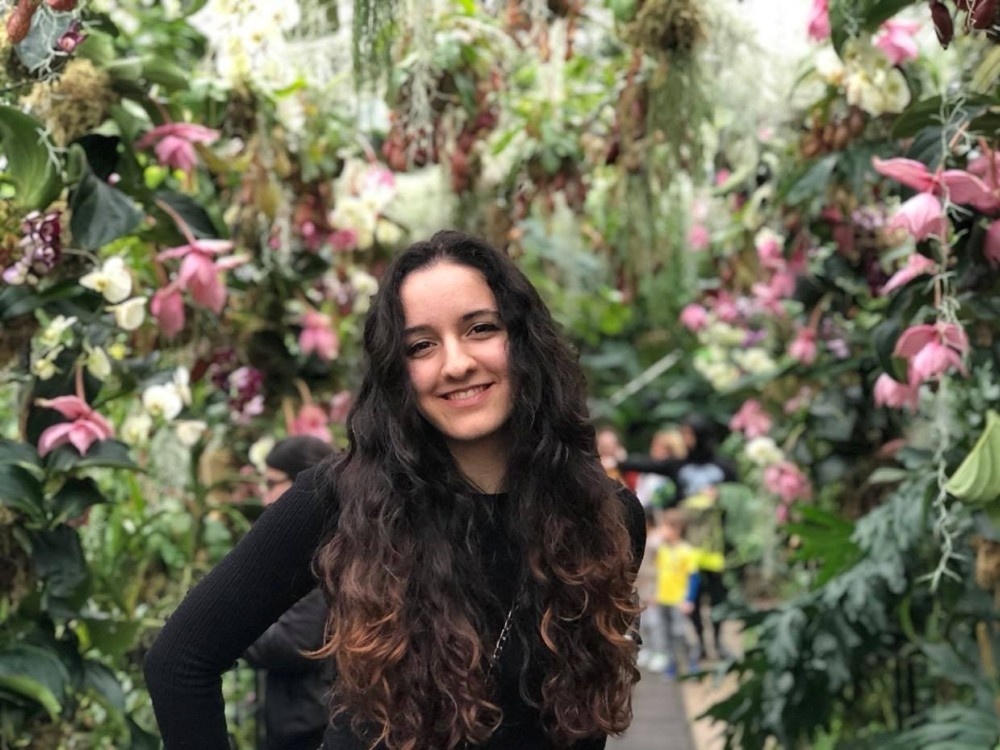
Celebrating LifeArc Early Career Researchers – Dr Lucia Luengo-Gutierrez and the promise of programmable nucleases
For British Science Week, we’re celebrating the Early Career Researchers helping to drive innovation in rare disease research at the LifeArc Centre for Rare Mitochondrial Diseases. Earlier this week we introduced Dr Andy Frey. Another of these researchers is Dr Lucia Luengo-Gutierrez, a Research Associate at the University of Cambridge who studies mitochondrial genetics and explores new ways to treat mitochondrial disease.
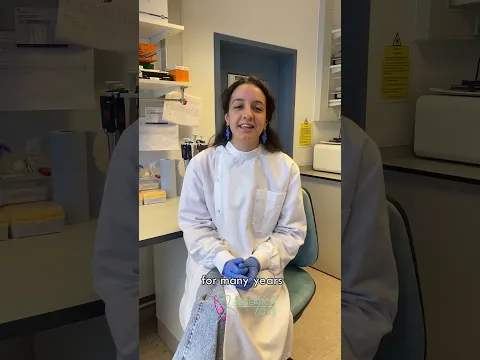
Dr Luengo-Gutierrez’s work focuses on a cutting-edge genetic technology known as programmable nucleases.
Editing the mitochondrial genome
Programmable nucleases are specialised molecular tools that can be designed to recognise and cut specific DNA sequences. In recent years, these technologies have transformed many areas of genetic research, allowing scientists to precisely target and modify genes.
However, editing DNA inside mitochondria has long been one of the most difficult challenges in genetics.
Unlike the DNA in the cell nucleus, mitochondrial DNA sits within a separate compartment and has been largely inaccessible to many traditional gene-editing tools. This has made it difficult to directly correct or remove harmful mutations that cause mitochondrial disease.
Researchers like Dr Luengo-Gutierrez are working to overcome this challenge.
A new route towards future therapies
By engineering programmable nucleases that can enter mitochondria and selectively target mutated mitochondrial DNA, scientists can reduce the proportion of faulty genetic material within cells. This approach could allow healthy mitochondrial DNA to take over, restoring more normal cellular energy production.
While this work is still in the research stage, it represents an exciting step toward developing future therapies for mitochondrial disease.
Early Career Researchers driving innovation
As an Early Career Researcher within the LifeArc Centre for Rare Mitochondrial Diseases, Dr Luengo-Gutierrez is part of a collaborative network working to accelerate progress in this field. By bringing together expertise in genetics, molecular biology and clinical research, the centre aims to translate discoveries in the lab into real benefits for patients.
For Dr Luengo-Gutierrez, the motivation is clear: understanding mitochondrial genetics is key to developing treatments for people living with these rare and often devastating conditions.
British Science Week is a chance to celebrate the researchers working behind the scenes to make that future possible.