
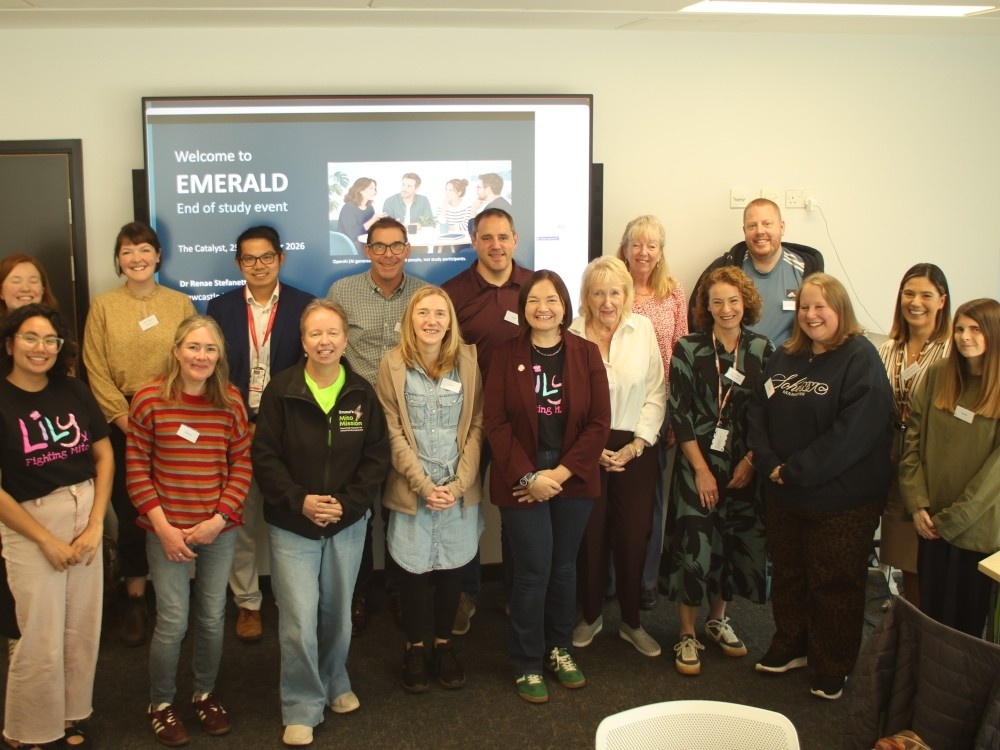
“Today I joined researcher Dr Renae Stefanetti from Newcastle University at the End of Study Dissemination event for the EMERALD study – a project exploring remote microphone technology to support hearing loss in adults with mitochondrial disease. The Lily Foundation helped fund this work, and I was keen to attend because EMERALD is a brilliant example of how meaningful PPIE can shape a study from start to finish.
We met in a bright, airy room in Newcastle’s Catalyst building, greeted by pastries, coffee and a warm welcome – small touches that showed how much thought Renae had put into the experience for her participants. Around a dozen people attended, some who had taken part in the study and others to support loved ones.
Once everyone settled, Renae walked us through the study from the very beginning – why hearing loss is common in mitochondrial disease, how hearing works, how the study was designed and what was found. Her explanations were clear, accessible and engaging, and everyone in the room felt comfortable asking questions throughout.
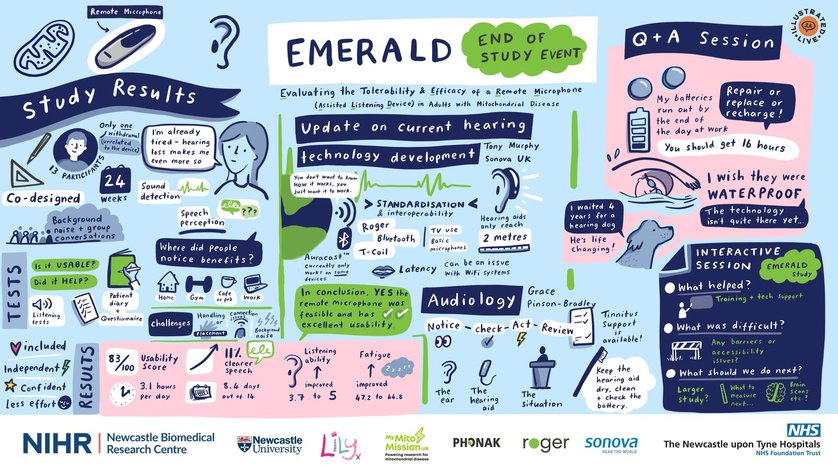
Renae had also invited two artists to help capture the day – a live illustrator and a videographer. As the session unfolded, the illustrator created a visual record of the discussions, while the videographer documented the event for wider sharing. Their presence added another thoughtful layer to the day. Because EMERALD focuses so heavily on hearing loss, offering visual ways to engage with the content felt especially meaningful. It was clear that Renae had considered not just what she wanted to share, but how best to make that information accessible to everyone in the room and to the wider mitochondrial disease community.
Hearing from participants
I spoke with Danielle, who came across the study via The Lily Foundation website. She hadn’t been involved in shaping the study design, but loved being part of the dissemination day, especially because it was the first time she’d ever been told the results of a study she’d taken part in. She described how EMERALD also had a real impact on her daily life, helping her manage symptoms rather than feeling like ‘just another survey’.
Another attendee, Jessica, said this was her first time being invited to a dissemination event too. She told me how rare it is to hear what happens after a study ends, and how clearly Renae explained the results. Seeing how many others had taken part made her feel ‘like we’d done something together’.
Both said they’d recommend other studies do the same.
Removing barriers to participation
Something that didn’t come up directly in conversation, but mattered just as much, was the practical support offered. Participants travelled from as far away as London and Dundee, many needing overnight accommodation – all covered by the study. Authentic engagement means making sure everyone who wants to take part can, and Renae’s team did this exceptionally well.
Adding value beyond the study
Renae also invited speakers from hearing technology company Sonova. Tony gave an overview of hearing devices and future technologies, while Grace, accompanied by her adorable hearing dog, Elf, shared practical advice on hearing aid care and troubleshooting. These sessions were genuinely useful; one family had the chance to ask about battery life while Danielle left with new information she plans to discuss with her care team. The slides and illustrated summary were also shared afterwards for participants to refer back to.
A simple but powerful involvement activity
Before closing the day, Renae handed out different coloured sheets of paper for what worked well, what was difficult and ideas for future studies. Participants wrote anonymously, then swapped papers to add whether they agreed or had a different experience. It was a thoughtful way to gather feedback while reinforcing that their voices matter.
How patient voices shaped EMERALD
After the event, I sat down with Renae to talk more about how patient involvement shaped her work. It became clear that PPIE wasn’t an add‑on – it was embedded throughout.
- Identifying the need: Before applying for funding, Renae spoke with patients in clinic who struggled with hearing despite using aids. A questionnaire on hearing aid use and satisfaction, completed in clinic, also helped identify the listening situations people found most difficult. Together, these insights highlighted gaps that shaped the study’s purpose.
- Capturing everyday experiences: In an early focus group, a participant suggested using diaries to record real‑time experiences when using the study device. Patient feedback also prompted the team to record the settings in which it was used, such as meetings or crowds. The results from these diaries provided a wealth of insights that questionnaires alone would have missed.
- Including carers: One carer recommended adding a way to capture the impact on families, a suggestion that later strengthened the funding application. Patient feedback also led to funding being included for carers or significant others to accompany participants to study visits, making it easier for people to take part.
- Shaping study outcomes: The patient panel helped prioritise which study assessments to include to avoid overburdening participants, reducing dropout risk and ensuring the study captured what mattered most.
- Making participation manageable: Patients helped shape practical aspects, including remote data collection where possible, access to technical support and less frequent follow-up during the extension phase to allow more time to use the study device.
As Renae put it: “There were so many elements we wouldn’t have incorporated if it wasn’t for the patient voice… we wanted to capture what was meaningful to them.”
The diaries also revealed experiences that numbers and quantitative methods alone can’t capture – like seeing a participant’s confidence grow as they used the device. These moments helped the team understand the real‑world impact of their work and were a rewarding reminder of what it meant to participants.
Why this matters
EMERALD shows how involving patients throughout a study can strengthen design, help overcome barriers to improve recruitment and participation and produce findings that genuinely reflect lived experience. It also shows how giving back – through clear communication, practical support and thoughtful dissemination – builds trust and connection.
Thank you to Renae for inviting me, and to Danielle, Jessica and everyone else who attended for sharing their experiences. I genuinely hope this inspires other researchers to embed patient voices throughout their work.”