
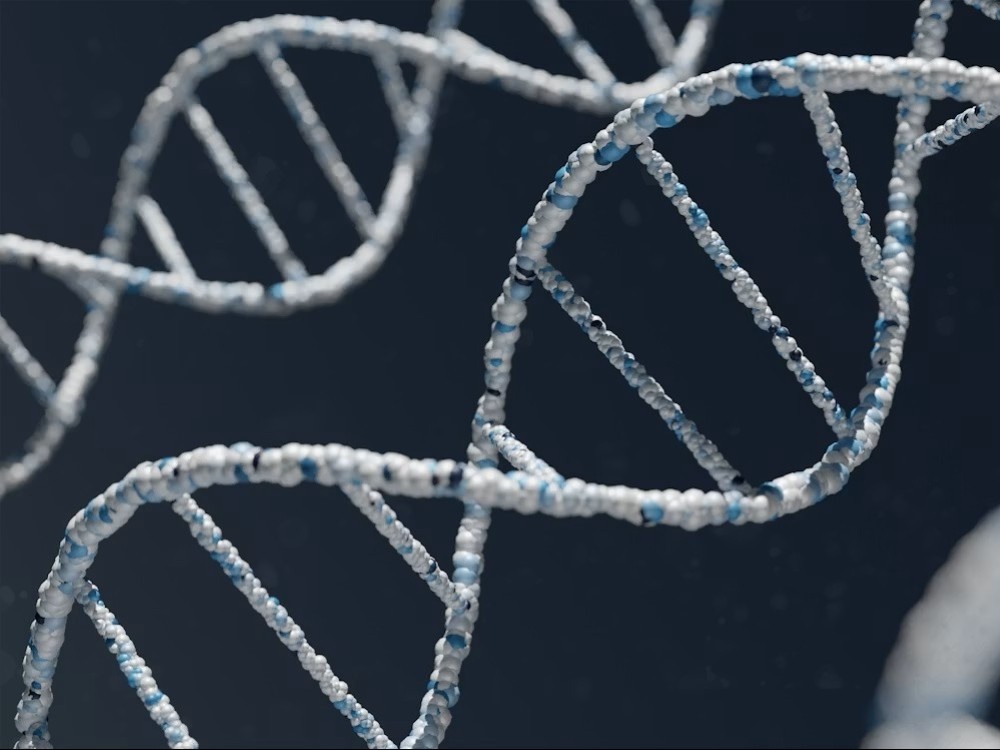
There are two types of DNA involved in mitochondrial disease
We all have two types of DNA that play a role in mitochondrial disease:
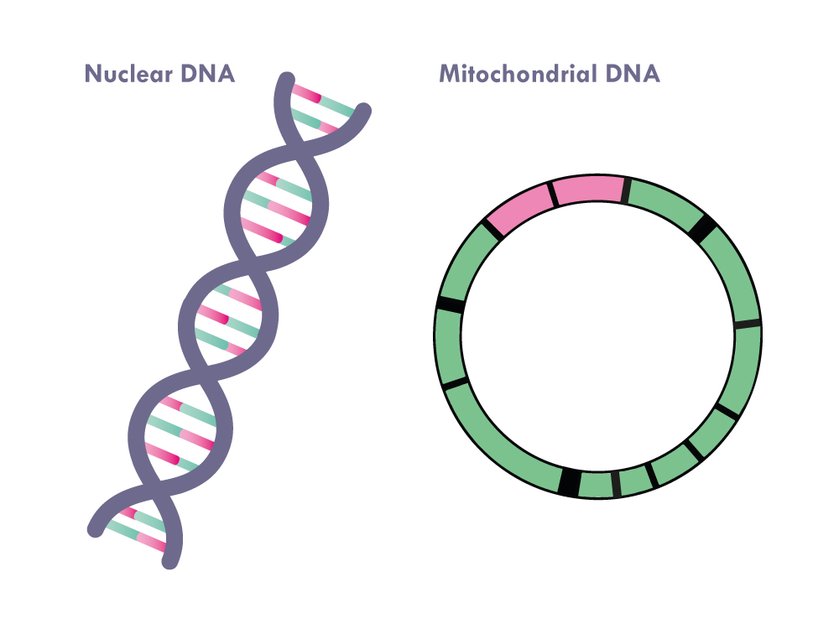
- Nuclear DNA, which is inherited from both parents
- Mitochondrial DNA (mtDNA), inherited only from the mother
Mitochondrial disease can be caused by genetic changes in either nuclear DNA or mitochondrial DNA, and the type of DNA involved determines how the condition is inherited.
Nuclear DNA inheritance in mitochondrial disease
When mitochondrial disease is caused by changes in nuclear DNA, it usually follows one of two inheritance patterns.
Autosomal recessive inheritance
Autosomal recessive inheritance is the most common pattern seen in children with mitochondrial disease:
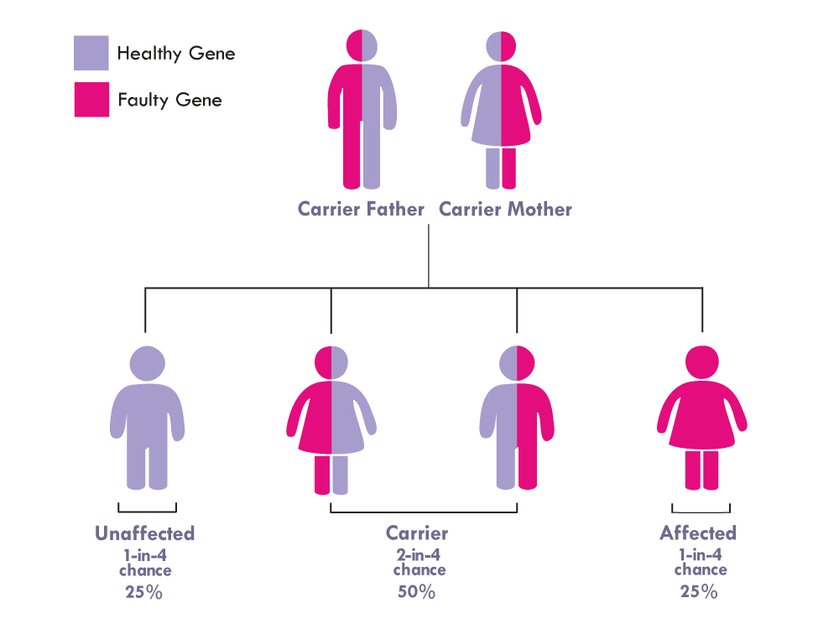
- A child must inherit two faulty copies of a gene, one from each parent
- Parents are usually carriers and do not show symptoms
For each pregnancy:
- 25% chance the child is affected
- 50% chance the child is a carrier
- 25% chance the child is unaffected
Autosomal dominant inheritance
In autosomal dominant inheritance, only one faulty copy of a gene is needed to cause disease:
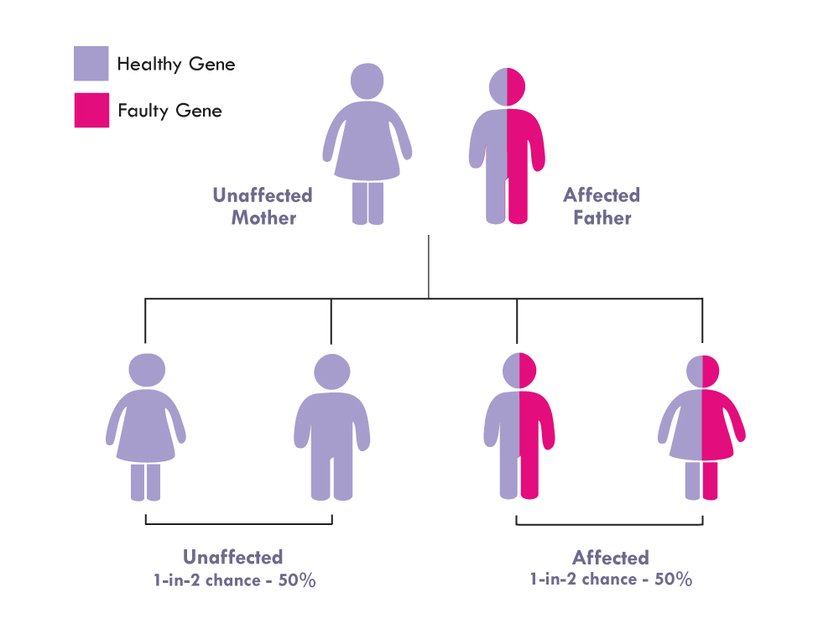
- An affected parent has a 50% chance of passing the condition to their child
- Symptoms and severity can vary widely, even within the same family
- It is not possible to predict how severely a child may be affected
Mitochondrial DNA inheritance (maternal inheritance)
Mitochondrial DNA inheritance, sometimes called maternal inheritance, follows a different pattern.
- Mitochondrial DNA is passed only from mother to child
- All children of an affected mother inherit the genetic change
- Fathers cannot pass mitochondrial DNA mutations to their children
X-linked inheritance and mitochondrial disease
Another, rarer inheritance pattern is X-linked inheritance, where the genetic change is located on the X chromosome.
- Males have only one X chromosome (XY) and are more likely to be severely affected
- Females have two X chromosomes (XX) and may have milder symptoms or be carriers
- X-linked mitochondrial diseases are much less common than other inheritance types
Sporadic (de novo) mitochondrial disease
Not all mitochondrial disease is inherited. In some cases, the condition is caused by a new genetic change that occurs for the first time in a family. This is known as a de novo mutation.
These sporadic cases can make mitochondrial disease harder to predict and may occur even when there is no family history of the condition.
Why understanding inheritance patterns matters
Understanding how mitochondrial disease is inherited can help families:
- Make sense of diagnosis and symptoms
- Understand who else in the family might be at risk
- Make informed decisions about genetic testing and family planning
Mitochondrial disease doesn’t follow one simple inheritance pattern. It may be inherited from both parents, from the mother alone, or arise for the first time in an individual. This complexity is why every family’s experience with mitochondrial disease is unique.
Want to learn more?
Follow the link below to our Guide to Mitochondrial Disease for a deeper explanation of mitochondrial disease, genetics and living with the condition.