



Why are biomarkers in mitochondrial disease so hard to find? - Mitochondrial disease research zone - The Lily Foundation - The Lily Foundation
The Lily Foundation logo featuring a butterfly, hearts and an 'x' for a kiss

Fighting mito,
finding hope.

Logo of the Lily Foundation's Research Zone Logo of the Lily Foundation's Research Zone

Research Zone

Welcome to The Lily Foundation’s Research Zone, your gateway to the latest breakthroughs, expert insights and cutting-edge developments in mitochondrial disease research.

Why are biomarkers in mitochondrial disease so hard to find?

Science unwrapped

22 October 2025

Biomarkers are like windows into how mitochondria are working, but finding the right window, with a clear view, takes time and precision. The good news? Science is making steady progress, especially thanks to the LifeArc Centre for Rare Mitochondrial Diseases. Every small step brings us closer to understanding, diagnosing and treating mitochondrial disease more effectively.

Three clear science beakers placed on a work surface

In part 1 of this blog post, we discussed what a biomarker is. Now we’re talking about why they’re so hard to find!

Prof. Patrick Chinnery, Lead of the LifeArc Centre for Rare Mitochondrial Diseases, believes that biomarkers are an essential part of the projects taking part within the centre.

“A critical step in developing new treatments for mitochondrial diseases is being able to show that a new approach improves the function of mitochondria," he states. “To do this we need better biomarkers of mitochondrial function that reflect the illness and how it affects people.”

But why are biomarkers so hard to find? Watch our video explainer:
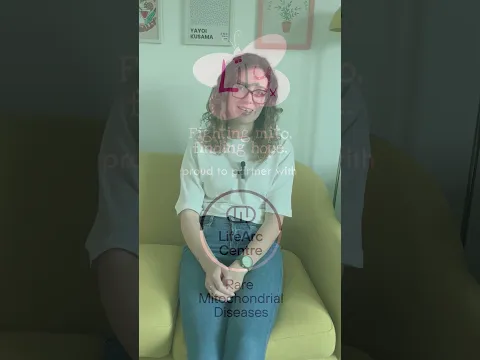
Reliable biomarkers are essential for faster diagnosis, better treatment monitoring and more effective clinical trials. Without them, it’s much harder to test new therapies or understand how mitochondrial diseases progress over time.

Researchers around the world are working to discover new biomarkers – ones that are more specific, easier to measure and more consistent. Each discovery brings us closer to clearer answers for patients and families living with mitochondrial disease.

Latest news

A year of progress, hope and community – a message from our founder

This past year has brought powerful steps forward for the mito community, from landmark scientific breakthroughs to the incredible efforts of our supporters across the UK. As we take stock of all that’s been achieved, we invite you to read a special message from our Founder and CEO, Liz Curtis, reflecting on the past 12 months and the hope guiding us into 2026.

It takes belief to live with mitochondrial disease

For Harry and his mum, their belief has been tested again and again. Harry lives with MERRF, but it took nearly 20 years for his syndrome to be correctly identified. We spoke to them about an ordeal all too common for adults with mitochondrial disease – the long and winding road to a diagnosis – and how they’ve learnt to live with positivity and belief in the face of an uncertain future.