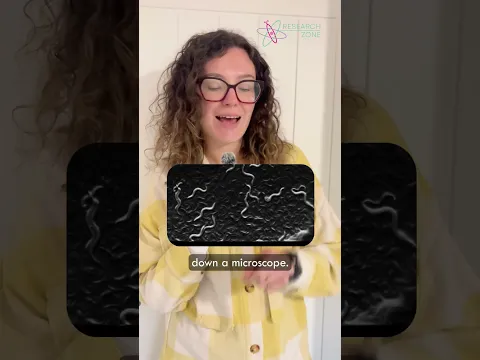


During a recent visit to Northumbria University, Research Manager Maria had the chance to speak with researchers who use a tiny worm – Caenorhabditis elegans – to study mitochondrial disease.
What is C. elegans?
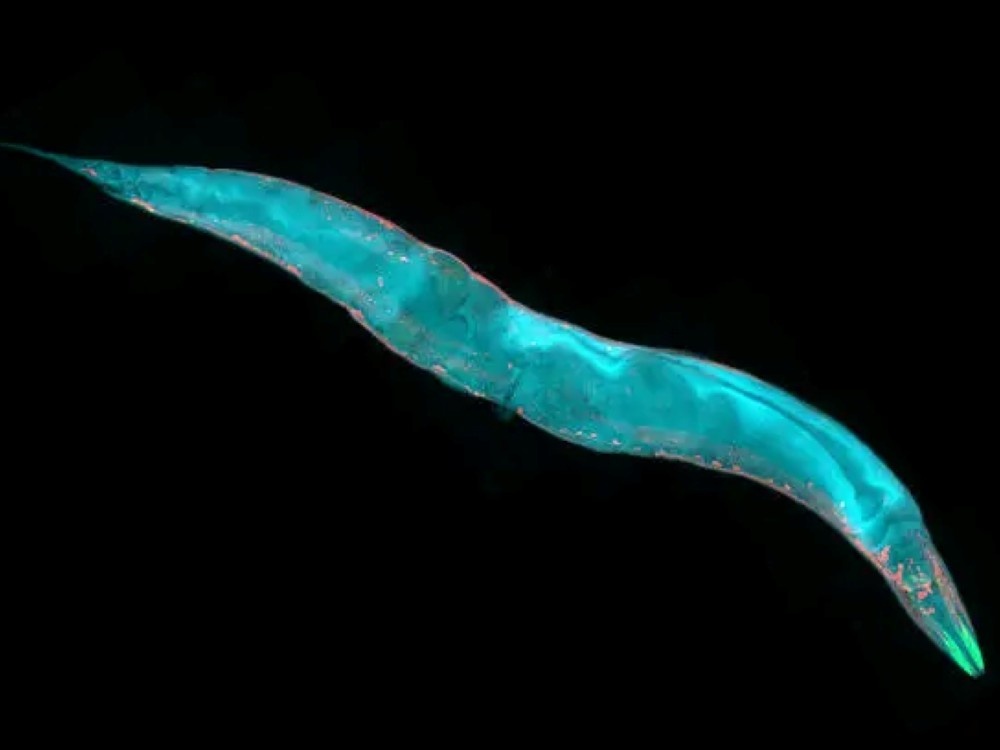
C. elegans is a transparent roundworm about 1mm long that lives in soil. It’s been studied in laboratories for decades and was the first multicellular organism to have its entire genome sequenced. Despite its simplicity, C. elegans shares a remarkable amount of biology with humans.
Crucially for mitochondrial research, many of the genes involved in mitochondrial function and energy production are similar between worms and people. This means that if a gene affects mitochondria in C. elegans, there’s a strong chance it plays a similar role in humans.
Why use worms to study mitochondrial disease?
We know that mitochondrial diseases are complex. They can affect many organs, vary widely between individuals and are often caused by changes in genes that are essential for life. Studying these conditions directly in humans is incredibly difficult, and even cell-based models can only show part of the picture.
These small worms offer several key advantages:
- Speed and scale: Worms grow from egg to adult in just three days and can produce hundreds of offspring. This allows researchers to study genetic changes, disease progression and potential treatments much faster than in animal models like mice.
- Whole-organism biology: Unlike cells grown in a dish, worms are living organisms with muscles, nerves, digestive systems and mitochondria working across all tissues. This means researchers can see how mitochondrial problems affect movement, development, fertility and lifespan.
- Powerful genetics: Scientists can easily ‘switch off’ genes, introduce patient-relevant mutations or tag proteins to see where they go in the cell. Many mitochondrial disease genes can be modelled in worms to understand what they do and why certain changes cause harm.
- Visible mitochondria: Because elegans is transparent, mitochondria can be visualised in living animals using fluorescent markers. Researchers can directly observe changes in mitochondrial shape, movement and health over time.
- Drug and compound screening: Large numbers of worms can be exposed to potential treatments to see whether they improve mitochondrial function or disease-related symptoms. This makes worms a valuable first step in identifying candidate therapies.
What kinds of questions can worms help answer?
Researchers use C. elegans to address fundamental questions such as:
- What does a particular mitochondrial gene actually do?
- How do disease-causing variants disrupt mitochondrial function?
- Why do some tissues seem more vulnerable than others?
- Can altering genes impact mitochondrial defects?
However, it’s important to remember that while worms are powerful, they’re not humans. C. elegans doesn’t have all the organs affected in mitochondrial disease, such as a brain comparable to ours or a complex immune system. Symptoms like seizures, fatigue or cognitive changes can’t be directly modelled.
Because of this, results from worm studies must always be interpreted carefully. A finding in C. elegans is not a treatment or diagnosis, but it can be a vital clue.
What happens after something works in a worm?
The question that arises after seeing something work in a worm is: if it works in a worm, what’s next? Typically, discoveries follow this sort of path:
- Validation in other models: Promising findings are tested in more complex systems, such as human cells (including patient-derived cells) or other animal models like zebrafish or mice.
- Understanding mechanism: Researchers dig deeper to understand why something works. Does it improve energy production? Reduce toxic by-products? Help mitochondria adapt to stress?
- Assessing safety and relevance: Potential treatments identified in worms must be shown to be safe and relevant in human biology. Many compounds fail at this stage, but knowing why is still valuable.
- Towards clinical research: Only after extensive preclinical work can a discovery begin the long journey towards clinical trials.
Although this process takes time, worm research often provides the foundation that makes later stages possible.
Why this research matters
Using C. elegans allows researchers to move faster, ask bold questions and explore ideas that would be impossible to test directly in people. For mitochondrial disease, where answers and treatments are urgently needed, these tiny worms punch far above their weight. Each step brings us closer to clearer diagnoses, better explanations and, ultimately, effective therapies.
Sometimes, big breakthroughs really do start small.