
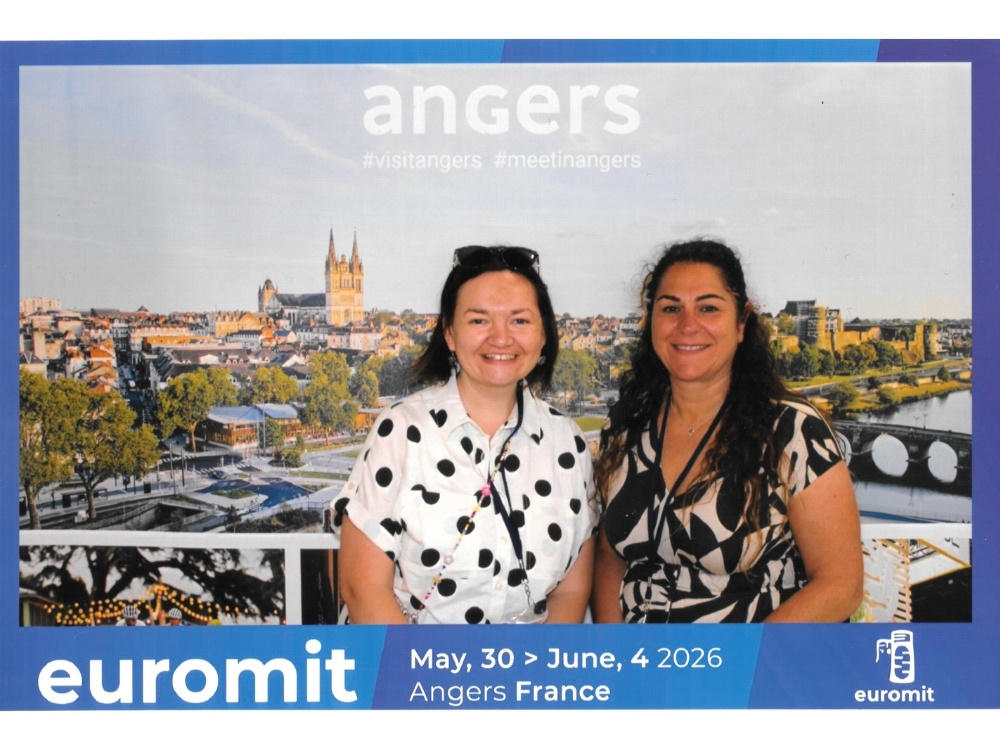
Euromit 2026 brought together 865 delegates from over 40 countries in the beautiful city of Angers, marking one of the most important global gatherings focused on mitochondrial disease research. Representing The Lily Foundation, CEO Liz Curtis and Head of Patient Programmes Katie Waller were proud to take part in such a prestigious event.
The conference opened with a keynote speech from Professor Patrick Chinnery, who reflected on the last time Euromit was held in France back in 1995. He highlighted just how far mitochondrial science has advanced since then, and while there’s still a long way to go, the overall vibe was entirely positive.
As members of International Mito Patients (IMP), Team Lily spent valuable time meeting patient organisations from across Europe, the USA and Australia. These in-person conversations provided a rare opportunity to share ideas, build stronger partnerships and explore how collaboration can accelerate progress for everyone affected by mitochondrial disease.
Showcasing Lily-funded research
Throughout the conference, our presence was unmistakable, with our beautiful butterfly fluttering across numerous posters and presentations showcasing cutting-edge UK research. How inspiring to see those hours of hard work in the lab translating into real impact for our community.
One standout moment came from Jamie, a Lily-funded PhD student based in Newcastle, who delivered a compelling presentation on her research into the UQCC1 gene. Her work is helping to uncover how gene faults disrupt cellular energy production, which leads to severe mitochondrial disease in babies and young children.
Another highlight was the presentation from Renata and the UCL team on the Lily Precision Diagnostics Project. This work is focused on improving diagnosis for those with suspected mitochondrial disease – a critical step toward faster, more accurate patient care.
Shaping the future of research
Liz and Katie dashed between talks, posters and meetings to make the most of this rare opportunity to be in the rooms where real change is made. One of those opportunities was to share our vision for a UK Mitochondrial Disease Research Institute with pharmaceutical and biotech partners.
Connections like these bring helpful perspectives on the practical things that can make such a difference: how treatments are designed, what regulators need to see and how research can be set up in a way that gives it the best chance of reaching patients. If we want to get our vision for the future of mitochondrial disease right first time, we need the right people around the table from the start.
A milestone moment for The Lily Foundation
Euromit 2026 also marked a significant breakthrough for The Lily Foundation – not simply supporting research, but actively leading and shaping it.
For the first time, both Liz and Katie presented their own work at the conference. Katie contributed as part of the TK2d steering committee and was first author on a poster examining early symptoms and disease progression, while Liz presented findings from the Experiences of Diagnosis study, highlighting the real-world challenges families face.
Thank you to the co-organisers and funders who believed in this work and gave us the chance to share it. This shows how our role is growing. We’re not simply funding research any longer but bringing people together to ensure that research is shaped by the real experiences families share with us.
Looking ahead to Euromit 2029
The week concluded with an exciting announcement… Euromit 2029 is coming to Newcastle!
With its global reputation for excellence in mitochondrial research, the city is a fitting host for the next conference. We’re proud to be part of the local organising committee welcoming the world to the Northeast in 3 years’ time, and we’re also honoured to be asked, as the UK’s leading mitochondrial disease charity, to help lead the patient programme.
Although 2029 might seem a long way off, we can look forward to this wonderful opportunity to create an inclusive event with patients and families at the heart of every conversation. And, in the meantime, as the patient voice grows in importance in research, care and treatment development, we’ll continue to champion it in the here and now.