Connie was deeply loved long before she arrived. Kerry and husband Ryan had spent years planning for another baby after the birth of their eldest daughter, Phoebe. But from the beginning, Connie’s pregnancy was anything but straightforward.
“I just felt unwell every day,” Kerry recalls. “The sickness started at around five weeks and continued throughout my entire pregnancy. It was exhausting.”
As a midwife herself, Kerry knew many of the complications she was facing were unusual. Multiple hospital admissions, severe sickness, growth concerns and worsening symptoms of pre-eclampsia meant the pregnancy was overshadowed by uncertainty.
Despite extensive testing, including an amniocentesis at 34 weeks, doctors were unable to identify the cause of Connie’s difficulties before birth. At 36 weeks and six days, concerns about reduced foetal movements led to an earlier-than-planned Caesarean section.
“When she was born, she was a feisty little thing,” says Kerry. “After such a difficult pregnancy, we were worried she might need help, but she didn’t. She seemed to be doing really well.”
For a brief time, it felt as though the family had finally reached calmer waters.
An invisible illness
Within 24 hours, everything changed. Connie struggled to maintain her blood sugar levels and temperature. Tests revealed dangerously elevated lactate levels, indicating that something serious was happening inside her tiny body.
“We’d gone from being in this happy bubble, thinking everything was okay, to being told her heart could stop at any point,” Kerry explains.
Connie was transferred first to Chesterfield’s neonatal unit and later to Sheffield Children’s Hospital, where specialists began searching for answers.
Eventually, doctors suspected a mitochondrial disease, and even with more than a decade of clinical experience, it was a term Kerry had never encountered before.
“Even though I’d been a midwife for nearly 14 years, I’d never once heard of it,” she says. “I started Googling, and quickly realised this wasn’t good.”
The knowledge she learned started to feel like both a blessing and a burden.
“The difficult thing was that I often understood what was coming before it was explained to us,” she says. “I knew raised lactate levels were serious but that meant nothing to Ryan. I knew enough to be frightened.”
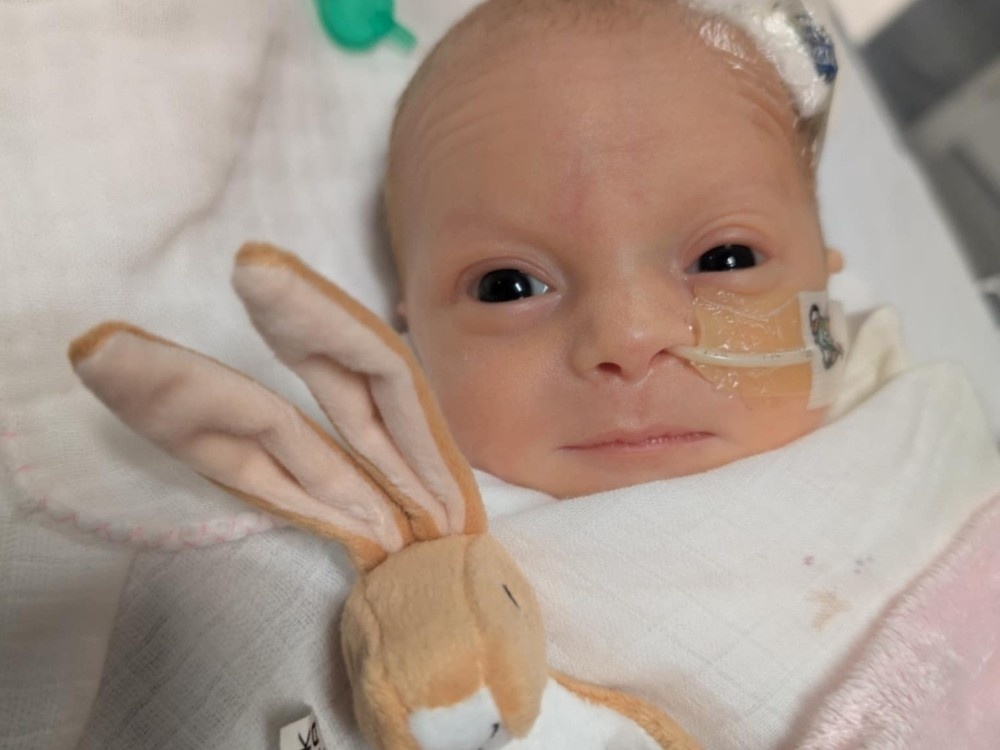
For weeks, Connie remained in hospital undergoing investigations while a team of specialists tried to understand the condition affecting her. Yet throughout it all, she never stopped fighting.
“Everyone was in awe of her,” Kerry continues. “For such a little baby, her strength and resilience were incredible. She actually looked healthy most of the time. It was hard to comprehend how sick she really was.”
Four precious weeks
Among the machines, blood tests and medical interventions, Kerry and Ryan focused on making memories. Some of the most precious moments involved Connie’s big sister, Phoebe.
“The bond between them was really special,” says Kerry. “Phoebe was only seven and had never spent significant time away from us before. Suddenly we were living at the hospital and she was staying with her grandparents.”
The family were supported by accommodation provided through The Sick Children’s Trust, allowing them to spend valuable time together during Connie’s short life.
Doctors eventually identified Connie’s condition as Leigh syndrome, a severe neurological mitochondrial disease. The family were told that children with similar diagnoses rarely lived beyond early childhood, but when Connie started to feed and show some improvements, they dared to hope they might have longer. Then, without warning, Connie collapsed.
A severe infection had triggered sepsis which overwhelmed her tiny body. Because of the mitochondrial disease, she didn’t have the energy reserves needed to fight. Connie died aged just four weeks and four days.
Learning to live with loss
In the months after Connie’s death, even everyday life felt unfamiliar. The family went back to a nursery filled with clothes and furniture for a baby who would never come home. The future they had imagined disappeared overnight.
“Baby loss changes you forever,” says Kerry. “Suddenly I was at home with no baby, having lots of spare time on my hands, lots of time to think. I found that really, really hard. I couldn’t have got through that time without Ryan by my side. I went back to work after four months, although looking back I don’t know how I did that.”
As a midwife, returning to a profession centred around new life was particularly challenging for Kerry.
“I loved delivering babies and supporting families during one of the happiest times in their lives,” she says. “But after Connie passed away, being around newborn babies became incredibly triggering.”
Kerry eventually moved into a different role within maternity services, and now works primarily in pregnancy assessment and antenatal care, supported by an understanding management team.
“I still love my job and I still feel incredibly passionate about supporting women and families,” she says. “But it’s changed me.”
Her experience has also made her more conscious of the assumptions healthcare professionals can unintentionally make.
“I'm much more careful about what I say. We often reassure women by saying everything will be worth it when they hold their baby, but I’ve learned that we should never assume what someone’s journey will look like.”
Finding support through The Lily Foundation
Alongside coping with baby loss, Kerry and Ryan were thrust into the unfamiliar world of mitochondrial disease and all its complexities. Eventually, while searching online for answers and support, Kerry discovered The Lily Foundation.
“When we found the charity, it felt like finding a family we never wanted to need,” she says. “We’re so grateful to Liz and her family for channelling their grief and the loss of their precious daughter and making an unforgettable legacy in Lily’s memory.
“On the one hand, it’s good to know that there are other people going through what you are. But my heart still sinks when someone new is welcomed into the group. I find that really hard because I think, another diagnosis and still people don’t know enough about it.”
Today, Kerry’s passionate about ensuring more families are signposted to The Lily Foundation when facing a mitochondrial disease diagnosis. She also wants greater awareness of the condition among healthcare professionals.
“I keep thinking, how did I spend 14 years as a midwife and never hear about this? So in the future I’m really keen to talk about Connie’s experience to the screening team and the bereavement team, to widen the knowledge about mitochondrial disease, baby loss and bereavement.”
Through their fundraising team, Remembering Connie, Kerry and Ryan hope to honour their daughter’s legacy by sharing her story and raising funds and awareness of both baby loss and mitochondrial disease.
“Whatever fundraising we do in the future, it will always be for The Lily Foundation,” she says. “At the moment we’re still in the thick of the grieving. One week I have an idea and then the next week I’m exhausted and it’s hard to just put one foot in front of the other. But we plan to do a lot more in the future.”
Breaking the silence
For Kerry and Ryan, one of the most important messages of Baby Loss Awareness Week is ensuring families never feel they have to hide their grief.
“Keep talking. Keep saying their name,” says Kerry. “They’re important and they’re never forgotten. There’s not a minute that goes by where we don’t think about Connie.
“Everything in our life now is bittersweet because we have one child, and we want her to have a nice life, and then we have this profound sadness for our other child who isn’t there. But I’d rather have that sadness than not because I see it as the strength of the love we had.”
Last year, the family couldn’t face attending a formal memorial event, so they created their own tribute instead. Using pink, blue and white ribbons tied to a fence near their home, they invited neighbours and friends to add the names of babies they’d lost. Before long, the fence was covered in ribbons carrying names, memories and messages of love.
“It was a way of showing that no baby is forgotten,” says Kerry. “Whether they were miscarried, stillborn, died as a baby or never even received a name.”
Connie’s legacy
Eighteen months on, grief remains a constant companion. But so does love. When asked what message Connie would leave behind, Kerry doesn’t hesitate.
“Just be happy and love the people around you,” she answers. “Connie was happiest when she was having cuddles, either lying on my chest or Daddy stroking her head. That often calmed her during medical procedures. She was always so content, even the staff used to say so.”
For Kerry and Ryan, Baby Loss Awareness Week is about more than remembering the babies who are no longer here.
It’s about creating space for conversations that many people still find difficult. It’s about recognising that every baby matters, every family’s grief is valid and every story deserves to be heard.
And, above all, it’s about helping grieving families know that they’re not alone.