
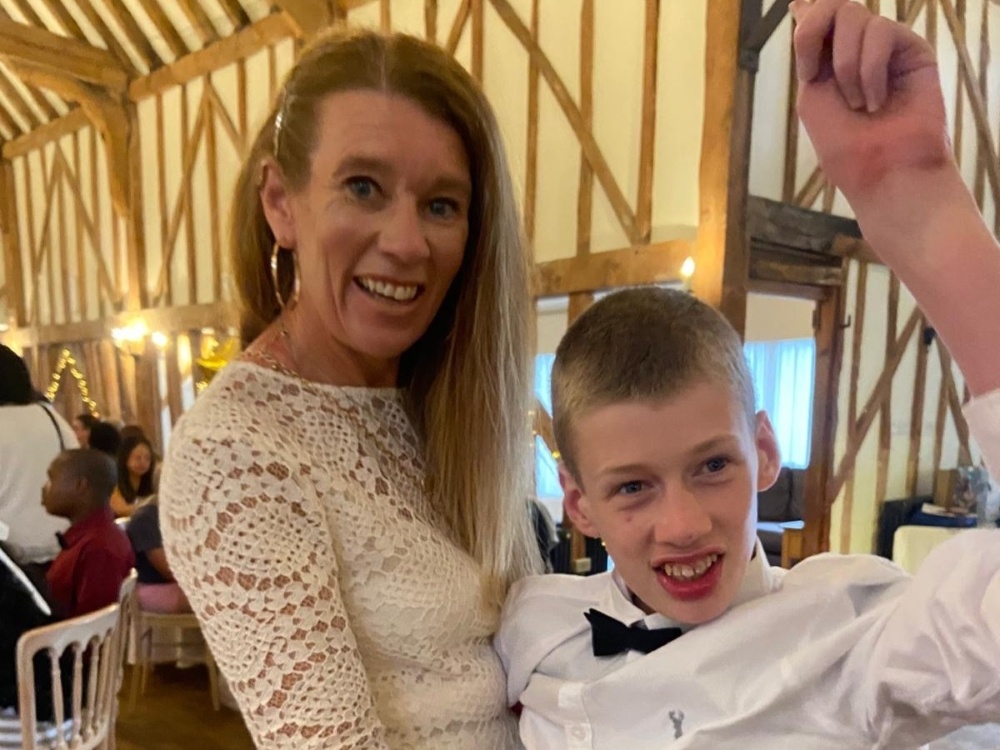
When Harry was born, everything seemed normal. A healthy pregnancy and a full-term baby. As far as Lucy, a first-time mum, was concerned, nothing suggested that life would soon take an entirely different path.
But by the time Harry was six months old, his development was delayed and Lucy felt something wasn’t right. Having been referred to a paediatrician, a few weeks later he began having seizures, and was admitted to Bristol Children’s Hospital, where he underwent various tests, including a muscle biopsy.
Finally, when Harry was around 20 months old, Lucy received the diagnosis that would change everything – mitochondrial disease, specifically Leigh syndrome.
“By that time, we’d moved back to Essex, where I’m from,” Lucy recalls. “We got the diagnosis from Great Ormond Street Hospital, and I remember receiving the letter about his gene mutation before the appointment. Of course, the first thing I did was Google it.”
What she found was devastating.
“I can remember just holding that information inside me before we even saw the doctors,” she says. “Then, after the appointment, I wasn’t ready to talk about it.”
So Lucy sent an email to everyone she knew explaining the diagnosis, but also setting a firm boundary. “I knew people would have questions,” she says. “But at that moment, it was about putting the right support in place for Harry. It’s weird – it feels like such a long time ago now, but equally I can remember it like it was yesterday.”
Finding support in the unknown
To begin with, finding support wasn’t easy. “There wasn’t a clear pathway in those days,” Lucy explains. “Speaking to other families now, they’re often signposted to The Lily Foundation at the point of diagnosis. That wasn’t really a thing back then – I was scrabbling around trying to find anything I could.”
Eventually, she connected with other families and found her way to The Lily Foundation, a turning point that brought not only information, but a sense of belonging.
“This community is incredibly special,” she says. “You wish you didn’t need it, but you wouldn’t be without it. I’m lucky because I live in the village where I grew up and I have a lot of friends and family around. That’s been a huge support, having people who’ve known me since I was a child, and are familiar with Harry’s condition.”
But Lucy’s also met families who live nearby through The Lily Foundation. “There are lots of families we’ve kind of grown up with, I suppose,” she reflects, “but you only see them once a year. That’s fantastic, but when I discovered some of them lived quite close, that made such a difference. It makes that connection more real.”
A life of constant care
Today, Harry’s 17. He can’t walk, is non-verbal and lives with complex epilepsy. But ask Lucy about her son, and her voice lifts instantly. “He’s just happy,” she says. “He has no negativity. He’s got this incredible way of bringing out the good in people.”
Life at home, however, is anything but simple. A typical day starts early. Harry has a carer who comes each morning to get him out of bed, give him his medication and support him to get dressed – that’s a process that can take up to 40 minutes because Harry really wants to try and do it himself!
Alongside this, Lucy’s getting her two daughters ready for school and preparing for her own full-time job. “It’s quite a hectic place in my house between 7 and 8 o’clock in the morning,” she laughs. “It’s full on!”
After school, the routine continues – getting Harry out of his wheelchair when he arrives home, preparing him a drink and a snack, putting Mr Tumble on the TV for him and then it’s time for dinner.
“He eats a normal, balanced diet,” says Lucy, “but he needs to be fed. We all have dinner together, then it’s a case of getting Harry upstairs for a bath, sorting his epilepsy meds and getting him into bed.”
The biggest challenge?
“You just never switch off,” Lucy says simply. “Even when you’re doing something else, you’re always thinking: what does he need next? Has he got a drink? Has he eaten? Is he clean? Harry’s not even that demanding – he’s a very content boy. But it’s constant.”
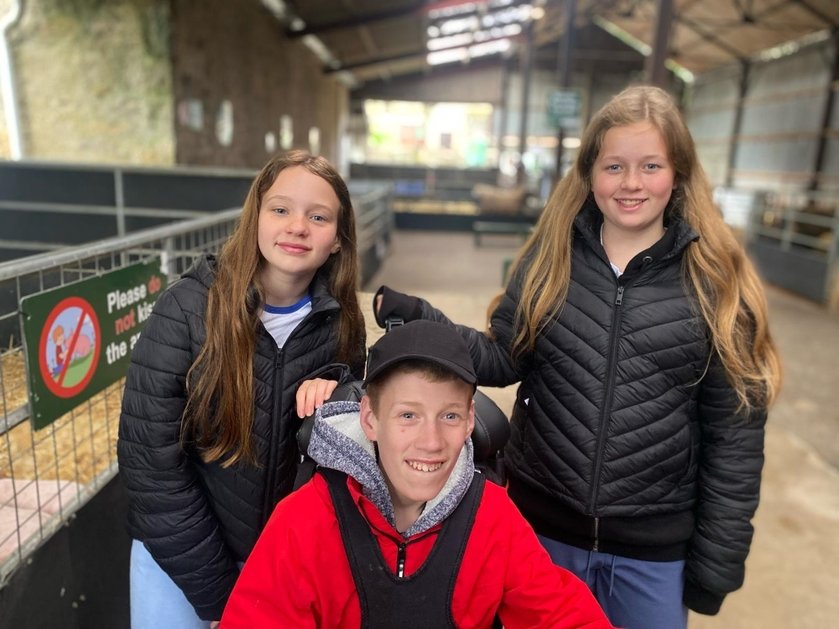
Finding moments to breathe
Despite the demands, Lucy’s learned how important it is to care for herself, too.
“I run a lot,” she says. “Sometimes I’ll go out after Harry’s gone to bed. I need that time to zone out and process things – to be on my own for a bit. I go to the gym too, usually when Harry’s at school.”
Lucy also works as an art tutor, which she describes as essential. “I often refer to Harry as my ‘sidekick’ because we spend so much time together, and that’s not a negative thing,” she says. “But my job gives me an identity outside of being a carer. I work with families who are navigating difficult paths too, so it brings me satisfaction to give something back from my own experiences.”
Two nights a month of respite care offer another rare opportunity to pause. “When Harry’s not here, the house is so quiet,” she says. “It makes me realise how much time and attention everything takes.”
The transition to adulthood
As Harry approaches adulthood, new challenges are emerging. Planning for the future – where he might live, how his care will be managed – is complex and often uncertain.
“When he was younger, I couldn’t look ahead,” Lucy admits. “I just focused on the here and now. But the questions started when Harry was about 14. I didn’t feel ready, I didn’t feel like I had the knowledge and I didn’t really know anyone who’d been through that process.”
Now, she’s learning to balance both, and recent experiences with respite care have opened up possibilities she hadn’t previously considered, including supported living.
“I always assumed he’d live with me,” she says, “but actually, as time’s gone on, it’s really opened my eyes. It’s a big decision, and there are so many unknowns, but I’m learning as I go. I’ve realised that if I ignore the future, I might not get the best outcomes for Harry.”
One thing that’s certain is that Harry’s medical care will transfer to Addenbrooke’s Hospital, under the watchful eye of Professor Patrick Chinnery, and Lucy’s delighted about that.
“He can’t stay at Great Ormond Street once he’s 18,” she explains, “so we’d been in discussion about where to refer him next. I’ve met Professor Chinnery through the Lily weekends, and having that firsthand insight has been huge. We’ve already had an appointment with him, and I didn’t need to explain anything – it felt like he already understood. That was really reassuring.”
Strength she didn’t know she had
Caring for Harry has changed Lucy in ways she never expected. “It’s given me a huge amount of strength,” she says. “I’ve done things I probably never would’ve done before.”
It’s also shifted her perspective on life – and people. “I see the good in everyone more now. That comes from Harry. He doesn’t have any negative thoughts or feelings. He’s just happy, and I suppose that’s made me look at other people and see their good attributes too.”
“It’s hard,” she says, “but it’s made me realise that in the past I would’ve just cracked on with things, whereas actually going somewhere and getting support is okay. We’ve been massively supported by The Lily Foundation, and it feels better if I can give something back. So I’ve done a lot in terms of fundraising. It’s given me focus and determination to do the best I can in all aspects of life.”
“And he’s given me a whole network of friends and people I probably would never otherwise have met.”

A message for Carers Week
For Carers Week, Lucy’s message is honest, but hopeful. “Being a carer is hard,” she says. “Really hard. But the way I get through it is by making sure that I care for myself too, whatever I do, however small it is. Alongside the running, I walk a lot and I love to garden. I have a mini greenhouse, and a small allotment in my village.”
Above all, she holds onto perspective. “No matter how bad some days are,” she says, “there’ll be good ones too. I always try and look at the positives.”
And at the centre of it all is Harry – her ‘sidekick’, her joy and her source of strength. “I feel so lucky to have him,” she says. “He’s quite an incredible boy, well, almost a man, and he’s really changed me for the better. He’s given me so much without ever saying a single word.”
Support families who can’t wait
Families like Lucy’s live with mitochondrial disease every single day. While research brings hope for the future, they need support right now. This Carers Week, help us be there for families when they need it most.